On this page
- What is the current Taka Bonerate coral reef condition?
- What did recent surveys measure?
- How much of the atoll is live coral, dead coral and sand?
- Why does condition vary so much by site?
- What threatens the reefs?
- Has coral bleaching been recorded at Taka Bonerate?
- What is being done?
- What can visitors do for the reef?
- What else do readers ask about reef health?
- Which sources support this page?
- How do I reach the desk?
By Taka Bonerate Editorial Desk
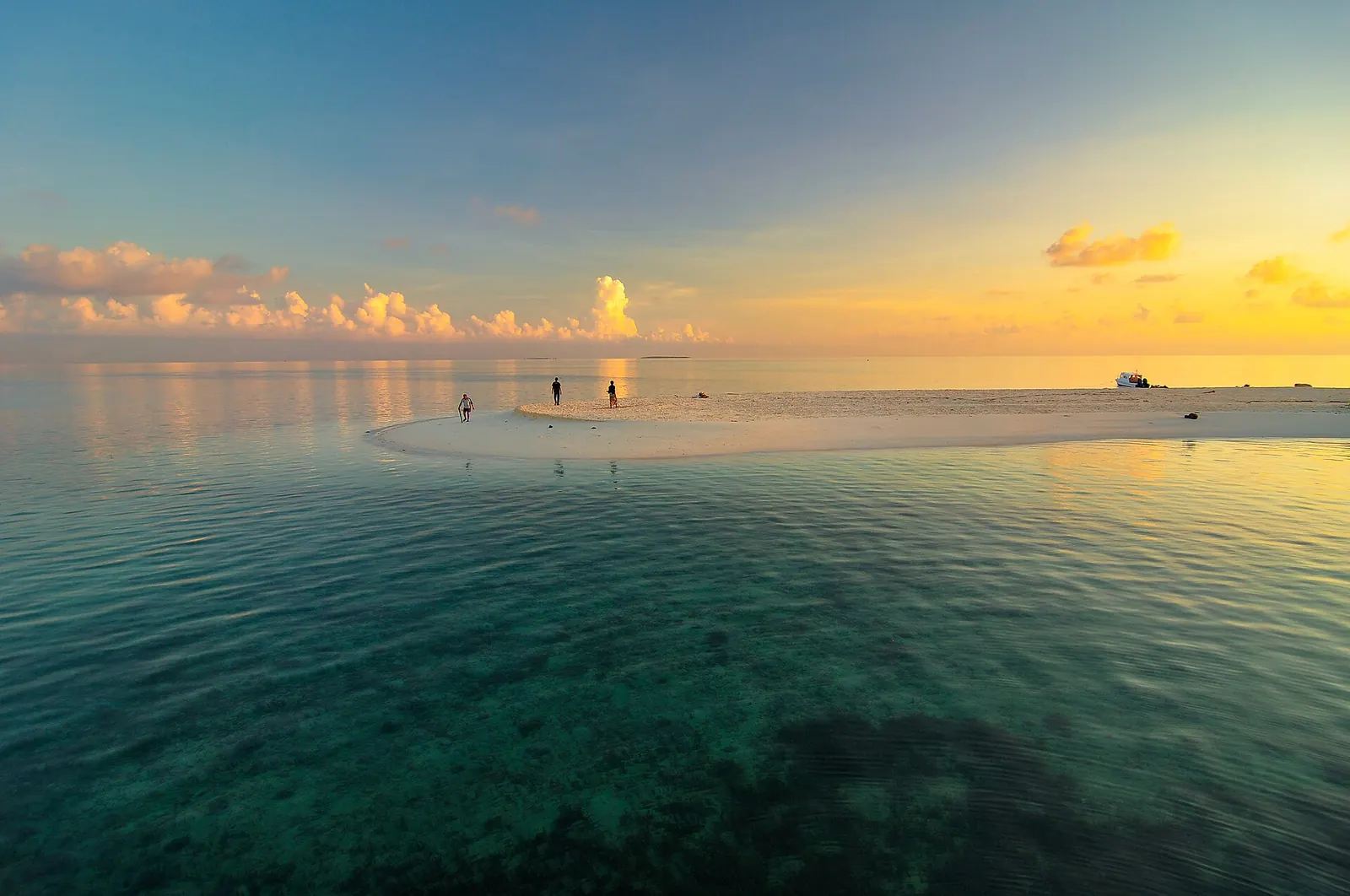
Taka Bonerate coral reef condition varies sharply by site, and no single health score is on record. A November 2023 survey measured hard coral at 74 percent at 5 m at Tinanja, while Tinabo Kecil showed 38 and 41 percent rubble. Park-hosted 2015 data run from heavily damaged to very good. No newer cover survey is on record, so today's condition is uncertain.
Our Taka Bonerate overview covers the atoll; this page holds only the reef figures, each with its place and date. Read it before you trust a brochure's adjective.
What is the current Taka Bonerate coral reef condition?
Mixed, and only partly known. The best single statement comes from WCS 2015 data on the park site, which show cover from heavily damaged to very good depending on the site, on the scale in the national regulation Permen LH 4/2001. The word "pristine" has no support in any of this. The same dataset classes Latondu Kecil as moderately damaged, and a park sheet describes blast damage alongside healthy coral at Kaldera, off Tarupa Kecil.
Scale makes any verdict harder. The Selayar regency report gives a coral reef spread of 500 km² within the atoll, while UNESCO gives 91,382 ha of coral reef for the much larger biosphere reserve. Those two figures measure different areas and should not be compared. A handful of survey points cannot describe reefs on that scale, and the size of the system is explained on the third-largest atoll page.
What did recent surveys measure?
The newest field numbers come from a Reef Check survey carried out in November 2023 and published in 2025 in Jurnal Biologi Tropis. It covered Tinabo Besar, Tinabo Kecil, Tinanja and Taka Lasalimu at 5 and 10 m. The table sets its figures beside older park records. The rows use different methods and years, so read across them for variety and not as a trend.
| Place | Date | Finding | Source |
|---|---|---|---|
| Tinanja | Nov 2023 | Hard coral 74 percent at 5 m; 40 percent at 10 m | Jurnal Biologi Tropis |
| Tinabo Kecil | Nov 2023 | Rubble 38 and 41 percent | Jurnal Biologi Tropis |
| Lantigiang | 2017 | Live coral 26.25–61.88 percent at 3–5 m | Park office |
| Latondu, north | 2015 | 55.16 percent | WCS data, park office |
| Latondu, east | 2015 | 29.66 percent | WCS data, park office |
| Latondu Kecil | 2015 | Moderately damaged class; 125 reef fish species; 15,178 fish per ha | WCS data, park office |
| Tinabo | 2014 page | Coral cover 3.05–57.59 percent; about 24 reef fish families | Park office |
| Taka Kayu Bulan, beside Jinato | 2014 page | Cover reaches 75–90 percent at some points | Park office |
At Tinanja, hard coral at 10 m is close to half the figure at 5 m. Tinabo Kecil and Tinanja are listed as core zone on an older park page written under the 2012 zoning, yet one is reported for high hard coral and the other for high rubble. Protection on paper does not by itself predict what a diver will see.
Individual sheets for named sites are on the dive sites page, and most of their cover figures are older still.
How much of the atoll is live coral, dead coral and sand?
The one habitat breakdown on record is undated. A 2019 paper in the Journal of Tourism and Hospitality Management gives these areas:
| Habitat | Area (ha) |
|---|---|
| Sand | 20,381 |
| Seagrass and algae | 19,748 |
| Live coral | 10,029 |
| Dead coral | 8,559 |
| Island or land | 437 |
| Bungin (sand cays) | 76 |
By our sum, the rows total about 59,230 ha, so they cover about a quarter of the 220,000 ha quoted for the atoll. They list roughly 85 ha of dead coral for every 100 ha of live coral. Land and cays come to 513 ha against the park's 526, and live and dead coral to 18,588 ha against the 500 km² reef spread in the regency report. The same paper prints the atoll as "220 Ha", an obvious slip, so treat the table as a rough old map and not a measurement of today.
Why does condition vary so much by site?
No source tests why condition varies. This is our list of differences the records show, and it is not a ranking.
- Past blasting. The Kaldera sheet describes a damaged patch sitting next to healthy coral.
- Exposure. Taka Latondu, a flat of about 2,000 ha, takes wind in both monsoons according to the park, and holds live coral of about 253 ha and seagrass of 398 ha. On that account, live coral occupies about an eighth of the flat, so read any percentage for a whole flat with care.
- Depth and position. The Tinanja numbers and the difference between north and east at Latondu show change over short distances.
- Fishing history. The park says seasonal residents were moved off Tinabo around 2008 and extractive fishing ended there. That has not produced a uniform result on nearby reefs: the 2014 page's Tinabo figures already spanned 3.05 to 57.59 percent, and rubble is high at neighbouring Tinabo Kecil in 2023.
What threatens the reefs?
The park names destructive fishing first. Its Jinato resort page singles out blast and poison fishing as what has damaged the reefs around Taka Sepe and Teros. Its turtle survey lists poison and explosives among threats to turtles too. Patrols east of Jinato seized 3 fishing compressors in January 2019, one dated example of enforcement.
According to the park office, most residents depend on fishing and the sea-product trade. A peer-reviewed 2021 paper in Sustainability reports that fishery output in the biosphere reserve dropped between 2014 and 2018, from roughly 29,000 to 21,500 tons a year. That figure covers the whole reserve and not the park, and a fall in catch does not prove a fall in coral.
Patrols give the newest dated look at fishing. On 17 and 18 May 2025, a park SMART patrol from Jinato reported no destructive or illegal fishing along its route, and found papers complete on five boats checked at Taka Sepe. Two days on one route cannot show that blasting has stopped.
Has coral bleaching been recorded at Taka Bonerate?
Only in two small, dated checks. In April 2020, the park checked 27 points near Jinato and Pasitallu and found no mass bleaching in provisional results. In May 2025, the same patrol team recorded 29 °C at Ibel Orange, which the park calls within normal limits, and saw two bleached coral colonies. Napoleon wrasse, a protected fish, was still at the site. That is the top of the 26.7 to 29 °C range on the park's older page. Neither check covers the whole atoll, and anyone giving a confident answer on bleaching, mortality or recovery should show a source.
What is being done?
Several things are under way, though results are rarely measured in public.
- Patrols. WCS Indonesia describes its role as backing routine SMART patrols run with the park office, plus an Integrated Prevention Model aimed at destructive fishing.
- Fishers' declaration. Hundreds of fishers signed a declaration against blast and poison fishing at Tarupa in March 2022, according to the park. A signature does not end the practice, but it matters that it came from the people who fish here.
- Restoration frames. At Tinabo Besar in March 2020, the park reports that 187 spider frames were maintained and 1,660 coral fragments replaced. Those numbers show effort. They do not show survival.
- Community gardens. Local groups at Jinato run a coral transplant garden where visitors can learn the process, according to the park.
- Zoning. Since the 2019 review, 10,046 ha is core zone, 25,875 ha is marine protection and 472 ha is rehabilitation, while 481,334 ha, about nine tenths of the park, is traditional-use zone. Those figures give areas and not permissions, so ask the park office what each zone allows. Consultations on a revision took place in October 2026, so these areas may change.
Tourism is sometimes offered as part of the answer. The same 2021 paper examines tourism as another source of income for small-island households in the reserve, which is a livelihood question and not a measure of what visitors do to coral.
What can visitors do for the reef?
Start with the park's visitor rules: no damage to marine life, no standing on coral, no anchoring on the reef and no rubbish at sea. Ask your boat crew how they moor at each stop, since anchoring is the rule a visitor is least able to control alone. Watch your fins and buoyancy over reef flats, which the park office puts at just 2–3 m deep. If you want to help directly, ask about the transplant work at Jinato or the coral transplanting the park lists for Tinabo.
What else do readers ask about reef health?
Does Taka Bonerate have pristine coral?
Park-hosted data run from heavily damaged to very good depending on the site, which does not fit that word, and a park sheet for Kaldera describes blast damage beside healthy coral.
Has coral bleaching affected Taka Bonerate?
Two dated checks are public. In April 2020 the park looked at 27 points near Jinato and Pasitallu and found no mass bleaching in provisional results, and in May 2025 it saw two bleached colonies at Ibel Orange. Neither describes the reefs today.
Does bleaching here follow a season?
No seasonal pattern is on record. The park gives sea surface temperatures of 26.7–29 °C, lowest in August and highest in December, but does not link them to bleaching here.
Can tourists support Taka Bonerate reef restoration?
The park lists coral transplanting among activities on Tinabo and says local groups at Jinato run a garden where visitors can learn the process. Ask whether a session is running during your dates.
How diverse are Taka Bonerate coral reefs?
Species counts are a separate question, covered on our marine life page. These measure variety across the park and say nothing about the health of any one reef.
Which sources support this page?
- Jurnal Biologi Tropis: Reef Check survey, November 2023
- Park office: oceanography and WCS 2015 data
- Park office: Kaldera
- Park office: Tinabo resort page
- Park office: Jinato resort page
- Park office: Latondu and Rajuni resort page
- Park office: zones and legal history
- Park office: 2026 zoning consultations
- Park office: bleaching check, April 2020
- Park office: restoration frames, March 2020
- Park office: compressors seized, January 2019
- Park office: fishers' declaration, March 2022
- Park office: turtle survey threats
- Park office: livelihoods
- Park office: Jinato transplant garden
- Park office: Tinabo history and species counts
- Park office: visitor rules
- Park office: sea temperatures
- WCS Indonesia: patrols
- Sustainability 13(12), 6655: fishery output and tourism livelihoods
- UNESCO: reef area of the biosphere reserve
- Selayar Islands Regency: 2025 report
- Wikipedia: older species counts
- Journal of Tourism and Hospitality Management: Bajo Taka Bonerate, 2019
- Park office: SMART patrol report, May 2025
How do I reach the desk?
Hold newer survey data, or a correction to anything above? Send it to the desk. The same contacts work for trip questions: WhatsApp +62 811-3941-4563 or bd@juaraholding.com. Trip requests can become paid bookings, which is explained in the disclaimer, and the desk promises no reef conditions.
Send the desk your dates, group size, and dive level. The desk replies in writing.
Ask the desk on WhatsApp bd@juaraholding.com