On this page
- When is the best time to visit Taka Bonerate?
- What does each monsoon do to the sea?
- Why do sources disagree on the calm months?
- What about water temperature and rain?
- How big are the tides at Taka Bonerate?
- When do festivals and crowds happen?
- What happens in a storm?
- What do people ask about seasons here?
- Which sources support this page?
- How do I reach the desk?
By Taka Bonerate Editorial Desk
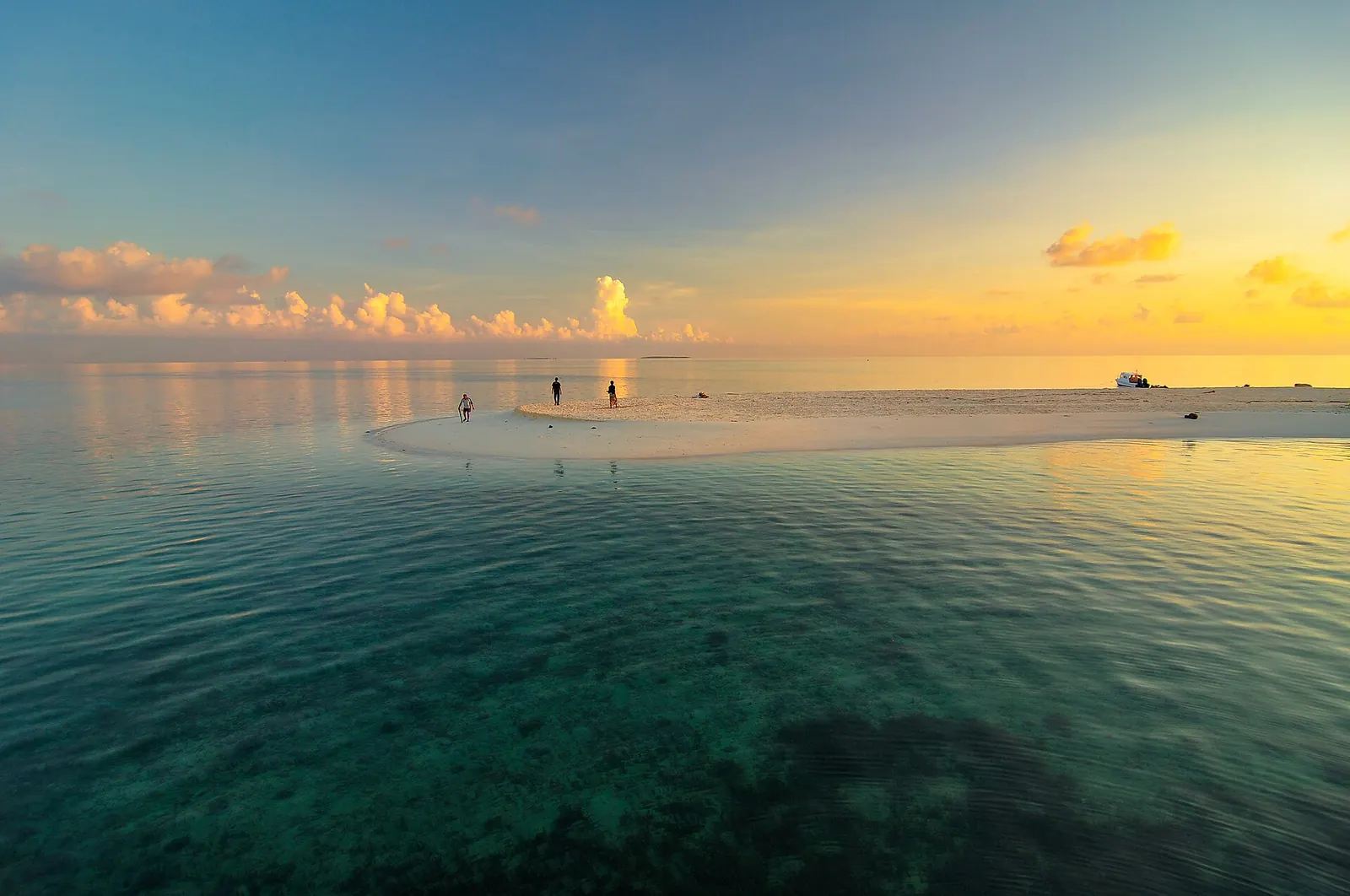
The best time to visit Taka Bonerate depends on which source you follow. The park office describes July to September as the calmest sea, while the national tourism portal recommends April to mid-May and October to mid-November for diving. The sources do not agree on one window, and nobody can promise conditions on your dates.
The park office, the national tourism portal, Wikipedia and several sellers all write about the same water and name different months. The table sets them side by side, and the list under it sorts them by a calm crossing, the diving window, or dates an operator runs. For the rest of Taka Bonerate, see the overview.
When is the best time to visit Taka Bonerate?
The month-by-month table starts with the park office's seasons, then adds everyone else who names that month. Read across a row and you can see where the sources agree and where they part.
| Month | Park office | Others naming this month |
|---|---|---|
| January | West monsoon: rain, strong wind, big waves | Sulawesi.com: waves reach 1.25 m about a fifth of the time |
| February | West monsoon | Sulawesi.com: same wave note as January |
| March | West monsoon | Wikipedia's good months begin; Underwater Atlas names it |
| April | Transition: sea unpredictable | Portal and Wikipedia favour it; Liveaboard Indonesia's window opens |
| May | Transition | Portal and Wikipedia to mid-month; Wonderful Selayar's window opens |
| June | Transition, with the west-flowing current at its peak | Geokepo and International Parks describe it as rough; both trip windows open |
| July | East monsoon: dry, weak wind, fairly calm | Geokepo and International Parks say rough; Sulawesi.com's driest months begin |
| August | East monsoon, coolest sea | Geokepo and International Parks say rough; Underwater Atlas names it |
| September | East monsoon | Wikipedia from mid-month; Sulawesi.com suggests it |
| October | Transition | Portal, Wikipedia and Sulawesi.com favour it; Underwater Atlas names it |
| November | Transition | Portal to mid-month; Wikipedia and Sulawesi.com; trip windows close |
| December | Transition, warmest sea | Wikipedia favours it; Sulawesi.com records 281 mm of rain |
Choosing by priority is more useful than choosing by a single answer:
- Calmest crossing on official data: July to September, per the park office, knowing two guides disagree for June to August.
- Diving window on official advice: April to mid-May or October to mid-November, per the national portal.
- Dates a named seller runs: May to November for Wonderful Selayar's 6-day trip; April to November on the Liveaboard Indonesia booking site. See Taka Bonerate liveaboard.
- Dates nobody recommends: January and February. No window above includes them, and the park office places rain and strong wind there.
What does each monsoon do to the sea?
The park office divides the year into four parts. In the west monsoon, about January to March, it reports rain, strong wind and waves of up to 3 m. In the east monsoon, July to September, it reports the dry season, weak wind and waves under 1 m. April to June and October to December are transition seasons, when the sea is sometimes calm and sometimes big.
Currents shift too. The park reports surface flow at 33 to 50 cm/s eastward in the west monsoon, about 75 cm/s westward at the June peak, and 25 to 38 cm/s in October. These are general surface numbers, so they will not tell you what any single channel does on a given tide.
The national portal describes the same rough season with waves of two metres or higher. Sulawesi.com gives a softer figure, with waves reaching 1.25 m about a fifth of the time in January and February, and states no origin for its data. Some of the Taka Bonerate dive sites are more protected than others: the park's sheet for Kolam Gantarang, inside the Taka Gantarang barrier reef, calls it sheltered in the west monsoon. Bear in mind that a sheltered reef does nothing for the open-water crossing you need to get there.
Why do sources disagree on the calm months?
The conflict is sharpest between the park and the portal. The park calls April to June and October to December unpredictable, yet those include the months the portal names as best for diving. Wikipedia's window, March to mid-May and mid-September to December, overlaps the portal but stretches further. Sulawesi.com narrows it to September to November.
Then there is June to August. Geokepo and International Parks both describe those months as rough, while the park office calls July to September fairly calm. None of them shows how it reached its view, so the disagreement cannot be resolved from the pages alone.
They answer different questions. The park's figures cover waves, wind and current, while the portal's label is about diving. An operator's window is different again, since it shows when a business chooses to sail and does not measure the sea. Where you weigh official data highest, the park's page gives the most specific wave and current figures, though it does not show its method and the page is old.
What about water temperature and rain?
The park office puts sea surface temperature at 26.7 to 29 °C, lowest in August and highest in December, with air at 28 to 32 °C all year. Pack for warm conditions in any month, and ask a dive operator about exposure protection if you chill easily in August.
On rain, the park calls the climate wet tropical with 4 wet and 5 dry months, average monthly humidity of 88 percent, and a peak of 300 mm in a month. Sulawesi.com says July to October are driest and gives 8 mm in August against 281 mm in December. It does not name its data source.
Salinity moves with the monsoons too. The park office gives 31.9 to 34.4 ppt, lowest in March and highest in October, and a pH of 8.4 to 8.7.
Underwater Atlas estimates about 25 m of visibility and 29 to 30 °C in its best months, naming March, August and October. Its visibility figure is derived from satellite chlorophyll, and its temperature for August sits above what the park office reports for that month. Read it as a model output and not as a diver's log. The Taka Bonerate diving page covers what the park's own reef sheets record.
How big are the tides at Taka Bonerate?
Two high waters a day is the pattern. The park office describes a mixed, mainly semidiurnal tide, and its page prints two figures that do not match: a range of 100 to 150 cm, citing the 2013 management plan, and a mean sea level interval of 200 to 250 cm, citing a 2001 study. A 2019 journal paper repeats the second figure and puts the ebb at about 2 m. At the lowest water, the park says, reef flats look like dry land broken by small tide pools. That matters for Taka Bonerate snorkeling and for any boat crossing a flat. No park tide table is on record, so ask the crew for the time of low water before planning a shallow stop.
When do festivals and crowds happen?
Festival Taka Bonerate and the Taka Bonerate Dive Camp ran on 7 to 11 October 2024. The 2023 edition was scheduled for 26 to 30 October at Benteng, Jinato and Tinabo, with a target of 1,000 visitors. Dates move each year, and none has been published for 2027, so confirm with the park office before planning around it.
Local holidays can be busy. The park estimated about 650 local visitors and 33 boats at Tinabo on Eid day, 31 March 2025. Foreign arrivals across the whole regency in 2025 stood at 196 in April, 222 in July and 86 in August, with most other months far lower. The park reported a large ship call that April. Those are regency numbers. Holiday tickets can also cost more, as Taka Bonerate permits and fees explains.
What happens in a storm?
The clearest example comes from late January 2019, when waves of up to 5 m damaged facilities on Tinabo and the Taka Bonerate National Park office closed visits for a time. That is one event and not a fixed annual closure. The national portal also says ferries stop when waves are dangerously high, and on this route a stopped boat can mean a missed flight.
Keep at least one spare day between your last boat and your flight home. Ask whoever sells you the trip, in writing, what happens to your payment if the boat does not sail. And before paying a deposit, read Is Taka Bonerate safe? for what is known about rescue and communications. Boat times by vessel type are set out in how to get to Taka Bonerate.
What do people ask about seasons here?
When are waves lowest around Taka Bonerate?
The park office reports the east monsoon, July to September, with waves under 1 m. Geokepo and International Parks disagree for June to August and call that stretch rough.
Is September a good month for Taka Bonerate?
The park office places it in the east monsoon, Sulawesi.com suggests it, Wikipedia includes the second half, and the portal does not name it. Both trip windows cover it, which shows when sellers sail and not how the sea behaves.
Is Taka Bonerate crowded during peak season?
No park-only visitor count is on record. The clearest crowd signal is the Eid estimate given above, so avoid national holidays if you want quiet.
When can you see dolphins around Taka Bonerate?
No source gives a dolphin season or a sighting rate. UNESCO names the common dolphin among protected species for the reserve, but that says nothing about any particular month.
What is the weather like in Taka Bonerate?
Warm and humid all year, with air at 28 to 32 °C according to the park office. Rain and strong wind concentrate in the west monsoon, about January to March.
Which sources support this page?
- Park office: climate, waves and currents
- Park office: January 2019 storm
- Park office: Kolam Gantarang sheet
- Park office: festival, 2024
- Park office: Eid crowds, 2025
- Antara: festival, 2023
- Indonesia tourism portal
- Wikipedia: Taka Bonerate National Park
- Wonderful Selayar: trip season
- Liveaboard Indonesia: Sulawesi
- Sulawesi.com: rain and sea notes
- Underwater Atlas: estimated conditions
- Geokepo: Selayar and atoll guide
- International Parks: Taka Bonerate
- UNESCO: protected species
- Selayar Regency: 2025 visitor report
- Journal of Tourism and Hospitality Management: Bajo Taka Bonerate, 2019
How do I reach the desk?
If you have a month in mind and a fallback month, send both by WhatsApp +62 811-3941-4563 or bd@juaraholding.com. Requests can turn into a paid booking, which is how the desk earns. It cannot promise weather, and anything agreed is set out in a written offer first.
Send the desk your dates, group size, and dive level. The desk replies in writing.
Ask the desk on WhatsApp bd@juaraholding.com