On this page
- Is Taka Bonerate snorkeling any good?
- Where are the shallow reefs?
- Can you snorkel from Tinabo?
- What can non-swimmers do at Taka Bonerate?
- What is at Lantigiang?
- When are snorkelling conditions calmest?
- What rules apply on the reef?
- Is it worth going only to snorkel?
- What do snorkellers ask before committing?
- Which prices are published?
- Which sources support this page?
- How do I reach the desk?
By Taka Bonerate Editorial Desk
Sourced figures: prices in the table carry their source and date. They are published by third parties and are not our offers. Fees and fares change.
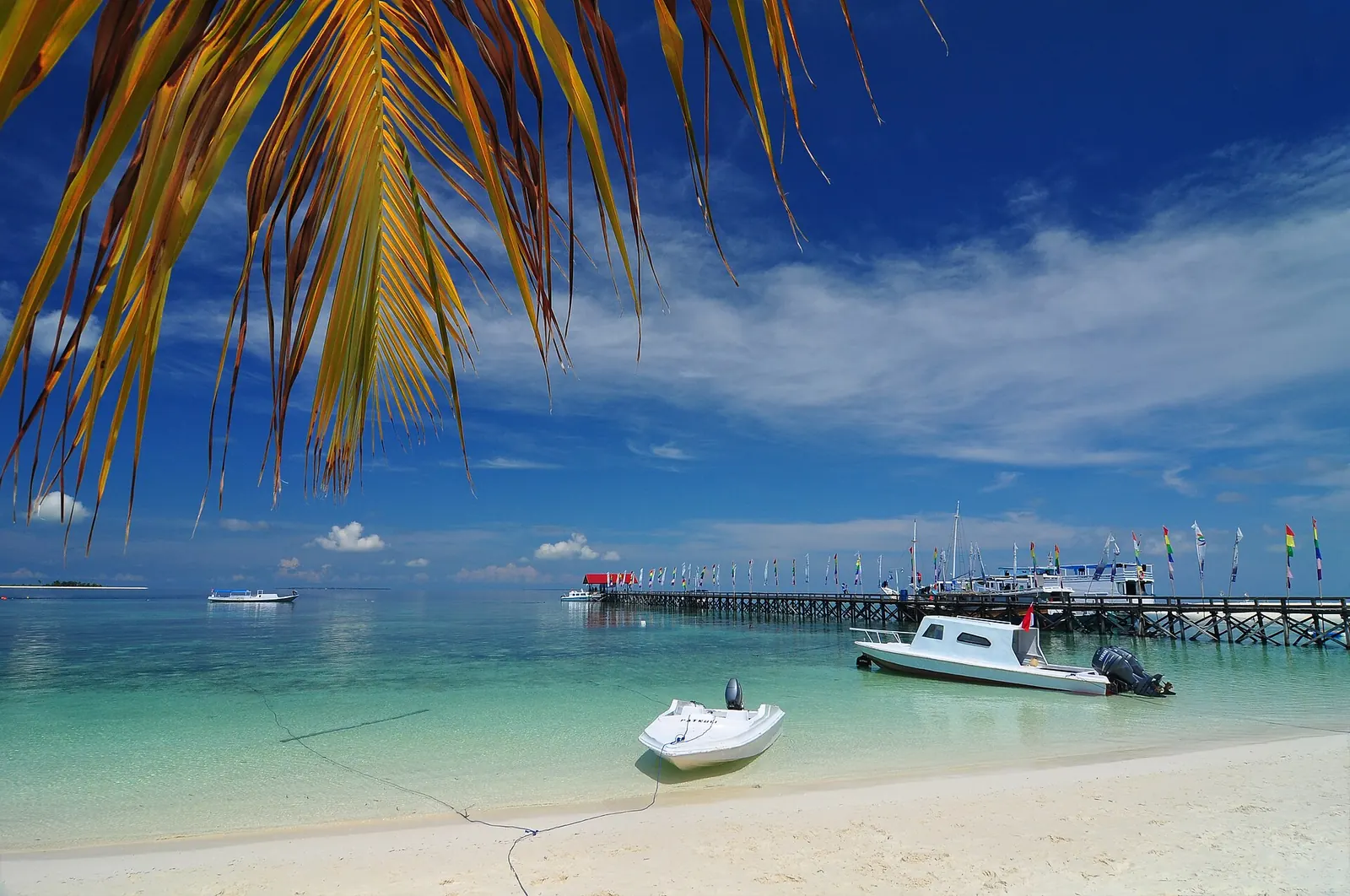
Taka Bonerate snorkeling is possible, and the park lists it as an activity, but the evidence is thinner than for diving. Reef flats are given as 2 to 3 metres, though the park says they can look dry at lowest water, and Lantigiang is praised for clear water. Most site data, though, is written for divers, and the boat journey is long. Come for the whole atoll, not one reef.
If you are the one person in a group who does not dive, this page shows which shallow places have a source behind them and how to read dive sheets from the surface. Divers can go straight to Taka Bonerate diving and the Taka Bonerate dive sites. Boats that sleep guests are under Taka Bonerate liveaboard, zones under Taka Bonerate National Park, and the atoll as a whole on our Taka Bonerate overview.
Is Taka Bonerate snorkeling any good?
It has official support, though not much measurement. The park office lists snorkelling among the activities on Tinabo, next to canoeing, coral transplanting and turtle hatchling release, and again on its general activity list for the park. The same office measures reef flats at just 2 to 3 metres, against a 200-metre maximum inside the park, so shallow coral does exist in quantity.
Wikipedia says 21 islands, 15 of them used for diving and snorkelling. It lumps the two activities together, so 15 is not a count of snorkelling sites. No site list written for snorkellers is on record, which is why the table below borrows from dive sheets.
One useful real-world marker comes from the park office: on 5 April 2025, 177 people from the MV Scenic Eclipse II snorkelled and explored the beach at Lantigiang. That shows a large organised group can do it there. It says nothing about the quality of what they saw.
Where are the shallow reefs?
The park publishes sheets for individual sites. They are aimed at divers and most date from 2014, but a few describe water shallow enough to interest someone at the surface. These are the shallowest with a usable description.
| Place | Area | Depth on the park page | What the page adds |
|---|---|---|---|
| Taka Kayu Bulan | Beside Jinato, west of the park | Not a dive sheet | Named as suited to swimming, snorkelling and diving; cover 75 to 90 percent at some points |
| Kolam Gantarang | Inside the Taka Gantarang barrier reef | 5 to 8 m | Protected from the west monsoon; about 90 percent density estimated close to 5 m |
| Pinky Fish | Off Tarupa Kecil | 5 to 8 m | Reef flat; current 0.15 m/s |
| Bulu Ayam | Taka Gantarang on its own sheet | 5 to 10 m | Reef flat to wall; coral density above 90 percent |
| Tabulate | Taka Gantarang | 5 to 15 m | Reef flat to wall; current 0.20 m/s; "all levels" refers to divers |
Read those depths with care. Five metres is the top of the range on a dive sheet, not a promise of coral at arm's length, and a wall can begin close to a flat. Bulu Ayam also turns up on the park's Tarupa page, around Tarupa Kecil, which differs from the site's own sheet, so ask a boat crew which spot they actually mean. Only Taka Kayu Bulan and Lantigiang are named by the park specifically for snorkelling.
The park gives reef flats as 2 to 3 metres, but says they look like dry land at the lowest water, and its page prints tide figures of up to 200 to 250 cm. Ask the crew for the time of low water before any shallow stop, as set out on the best-time page.
Operators add a little. Wonderful Selayar lists reef, sandbank and island stops on its own itinerary, naming Latondu, Jinato and "Lantigian". That is one company's plan, and it does not tell you which reef suits a nervous swimmer. A 2019 journal paper names two more: an Acropora snorkelling spot at Rajuni, and a spot at Latondu called Nemo, known locally as nambo-nambo.
Can you snorkel from Tinabo?
The park lists snorkelling there, but check what "from" means before you picture walking off the beach. The named sites nearest the island are Acropora Point, about 600 metres out, and Corina Corner, about 620 metres, and both park sheets record moderate to strong current. Those are boat stops. The same park page gives Tinabo coral cover anywhere from 3.05 to 57.59 percent, so a poor patch and a good patch can be close together.
Zoning needs a question too. The park's Tinabo page, written under the 2012 scheme, calls Tinabo Besar a utilisation zone, Taka Lasalimu marine protection, and Tinabo Kecil, Tinanja island and Bungin Tinanja core zone. Zones were reviewed in 2019 and a further revision is in consultation, so ask the park office whether a stop you see advertised at a core-zone name is currently allowed.
Baby sharks need no swimming at all. A 2024 park article mentions shore-side watching of black-tip baby sharks, and the same year's cruise activity list includes interacting with them. Our page on baby sharks at Tinabo covers the survey behind this. An older park page mentions feeding them; do not do that.
What can non-swimmers do at Taka Bonerate?
A 2018 Jakarta Post article lists sunrise and sunset viewing, canoeing, and bird and dolphin watching for people who cannot swim or dive, and warns that dolphins take luck. For anyone who wants to stay dry it adds fishing, beach volleyball and local food. The park's Tinabo page also lists coral transplanting and tree planting, and cruise groups have watched boat building and fish drying on Rajuni. Peek Holidays, a travel blog, captions Bungin Tinabo, a sand cay, as a sunset spot in its 2018 trip report. All of it sits at the far end of the same open-sea crossing, and whether a canoe or a net is on hand on your dates is a question for the park post or your operator.
What is at Lantigiang?
It has the clearest case in the sources. The park office praises the very clear water for snorkelling and likens the sand to flour, on an uninhabited island of about 10 hectares that takes 15 to 30 minutes to walk around. Its 2017 figure for live coral at 3 to 5 metres runs from 26.25 to 61.88 percent, which matters here because it was measured at snorkelling-relevant depth.
The catch is getting there. Park pages disagree on the hop from Jinato, one saying about 15 minutes and another 30 to 45. With nobody living on the island, carry water, shade and a way back. Our Lantigiang Island guide covers camping, turtles and the rest.
When are snorkelling conditions calmest?
Sources disagree. For July to September, the park office reports a dry season with weak wind and a fairly calm sea, yet Geokepo and International Parks describe June to August as rough. Water temperature is less contested: the park gives a narrow band of 26.7 to 29 °C, coolest in August and warmest in December. Our month-by-month guide lays out the rest of the disagreement. Kolam Gantarang is the one shallow site the park describes as sheltered in the west monsoon, though reaching it still means a boat crossing in that season.
What rules apply on the reef?
The park's visitor rules fit in a few lines, and the first applies to snorkellers more than anyone:
- No standing on coral.
- No damage to marine life.
- No rubbish at sea.
- No catching protected species.
Over a shallow flat, a tired swimmer may look for somewhere to stand, and park rules forbid standing on coral. Ask whether the boat carries a flotation vest that fits, and who stays in the water with you. Fees are handled separately: the price table on this page lists the older park snorkelling fee and one operator's foreign ticket figure, and our permits and fees page explains why the fee law has moved on. On gear, Underwater Atlas describes rental at Tinabo as limited, so pack your own mask and fins.
Is it worth going only to snorkel?
One commercial guide says no. Discover Your Indonesia writes that "it's probably not worth the trip just to snorkel". That is an undated opinion from one site, and the park's activity pages do not weigh the question at all.
Our reading of the published material sits close to that opinion, with a condition. The chain from Makassar to the atoll can fill a day or more each way, as our route guide shows, and that time buys more than reef.
- It makes sense if you are travelling with divers, or you want sand cays, village stops and open sea as much as coral.
- It makes less sense if your only goal is an easy reef from the beach, on a short holiday with fixed flights.
- Ask before paying: which named shallow stops are planned, what happens if the sea rules them out, and who stays in the water with weaker swimmers.
What do snorkellers ask before committing?
Is Taka Bonerate suitable for beginner snorkelers?
No source rates any stop for beginners. Tell the crew how well you swim, and ask which stop they would choose on that day.
Do you need snorkelling experience for Taka Bonerate?
Park pages set no experience requirement for snorkelling. Ask the crew who they allow in the water. Say honestly how well you swim when you ask, and request a flotation vest if you are unsure.
Can you rent snorkelling gear in Taka Bonerate?
Do not count on it. Underwater Atlas describes rental at Tinabo as limited, in the context of dive gear. A mask, snorkel and fins you already know are small enough to carry from home.
Why is Taka Bonerate good for snorkelling?
The case rests on reef flats the park gives as 2 to 3 metres, which it says can look dry at lowest water, high coral density on some park sheets, and very clear water reported at Lantigiang. Those are park descriptions, mostly from 2014 to 2017, and conditions change, so treat them as a starting point.
Can I touch coral while snorkelling in Taka Bonerate?
No. The park rules forbid standing on coral and damaging marine life. Keep your fins up over shallow flats. Ask the crew where you can rest without touching the reef.
Which prices are published?
Public fees, fares and third-party listings, each with its source and date. None of these is our price. Fees and fares change, so check the source before you rely on a figure.
| Item | Published price | Source | Checked |
|---|---|---|---|
| Snorkelling activity fee, general visitor (park page, older list) | IDR 15,000 per person per day | tntakabonerate.com | Nov 2026 |
| Entry ticket for foreign guests, as stated by operator Wonderful Selayar (not included in its trip price) | IDR 150,000 per day | wonderfulselayar.id | Nov 2026 |
Which sources support this page?
- Park office: depth, monsoons and temperature
- Park office: Tinabo area, activities and zones
- Park office: nature activities
- Park office: Lantigiang
- Park office: Lantigiang trip from Jinato
- Park office: oceanography and coral data
- Park office: Jinato area and Taka Kayu Bulan
- Park office: Tarupa area
- Park office: Kolam Gantarang sheet
- Park office: Pinky Fish sheet
- Park office: Bulu Ayam sheet
- Park office: Tabulate sheet
- Park office: Acropora Point sheet
- Park office: Corina Corner sheet
- Park office: Scenic Eclipse II call
- Park office: 2024 cruise group activities
- Park office: ecotourism article, 2024
- Park office: 2026 zoning consultation
- Park office: visitor rules
- Park office: zones since the 2019 review
- Wikipedia: Taka Bonerate National Park
- Geokepo: Taka Bonerate guide
- International Parks: Taka Bonerate
- Wonderful Selayar: trip stops
- Underwater Atlas: gear note
- Discover Your Indonesia: travel guide
- Journal of Tourism and Hospitality Management: Bajo Taka Bonerate, 2019
- The Jakarta Post: things to do at Taka Bonerate, 2018
- Peek Holidays: trip report, 2018
How do I reach the desk?
Say who in your group swims, who dives, and how many days you have: WhatsApp +62 811-3941-4563 or bd@juaraholding.com. Because a request can turn into a paid booking, we have a commercial interest in your answer. The desk has no boat or reef stop of its own to promise, and only a written offer binds anyone.
Send the desk your dates, group size, and dive level. The desk replies in writing.
Ask the desk on WhatsApp bd@juaraholding.com