On this page
- Why are there baby sharks at Tinabo?
- How many are there?
- Why Tinabo and not Jinato?
- How did they come to this beach?
- Are they safe to be around?
- How should visitors behave?
- Can you snorkel with or photograph them?
- Where would you stay to see them?
- What else do people ask about the Tinabo sharks?
- Which sources support this page?
- How do I reach the desk?
By Taka Bonerate Editorial Desk
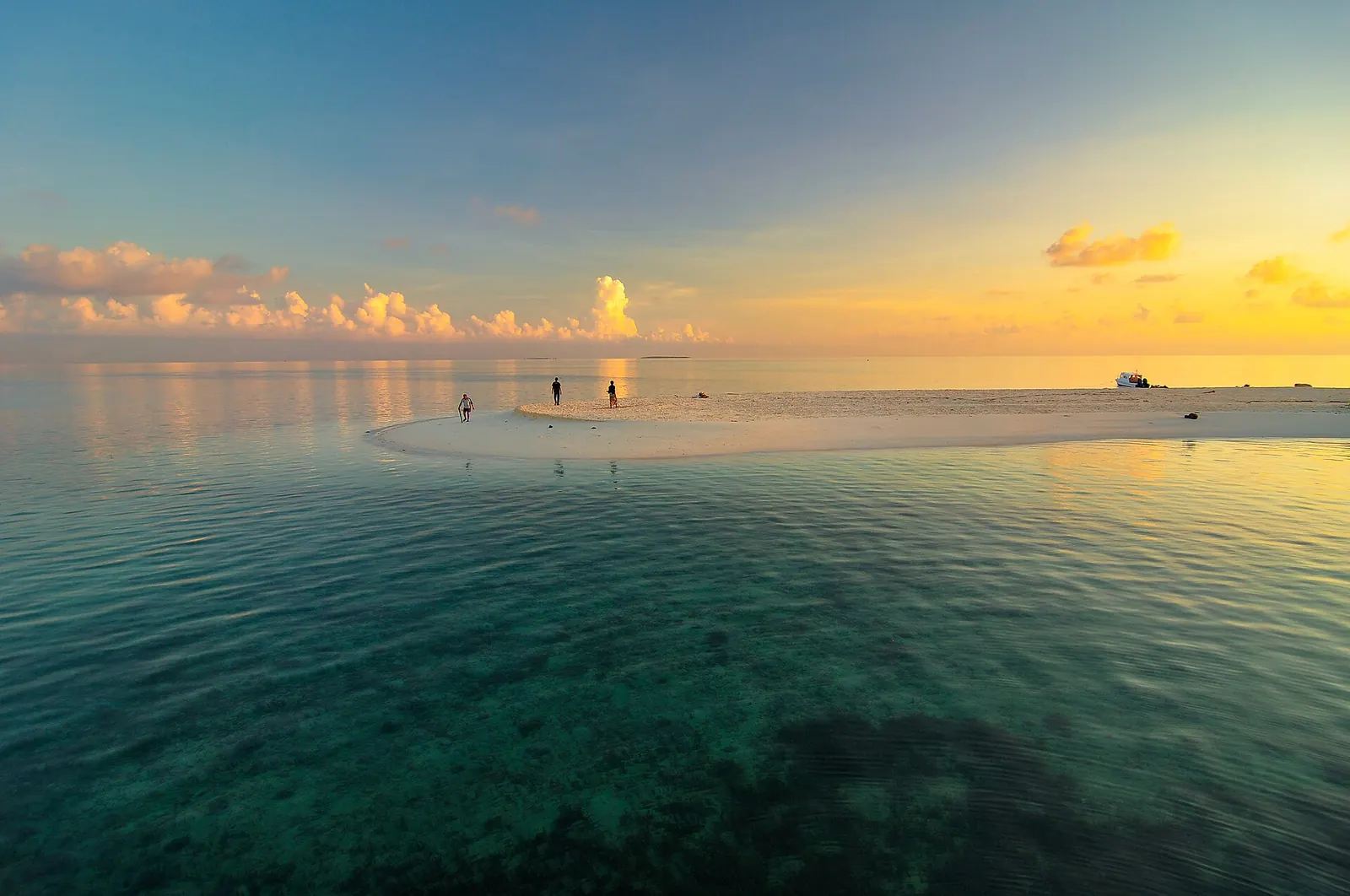
Baby sharks at Tinabo are juvenile blacktip reef sharks that gather in the shallows of Tinabo Besar in Taka Bonerate National Park. A July to August 2024 survey reported by the park counted 207 there against 3 at Jinato, and named slower current as the main reason. They are wild animals, so no visit can guarantee seeing them.
This is the story of one species on one beach. It rests on a small number of park documents, some of them a decade apart, and they do not all say the same thing about how people should behave. Both versions are given below, along with where this guide comes down.
Why are there baby sharks at Tinabo?
The fullest answer comes from a study by Universitas Brawijaya and the park, published in Jurnal Kelautan Tropis in 2025 and reported on the park's site. It compared two sites in July and August 2024 and found current to be the main factor. Water moved at 5.28 cm/s at Tinabo and at 10.04 cm/s at Jinato, so Tinabo's current ran at about half the speed.
That finding is about habitat. It is the study's main factor for this shoreline, and it does not explain everything. The park's older account adds a human reason, covered further down, and the two fit together without conflict.
How many are there?
There are two published numbers, and they should not be read as a trend.
| Year | Place | Number | What kind of number | Source |
|---|---|---|---|---|
| 2018 | Off the beach by the guest house, Tinabo | 30 to 60 juveniles of 25–35 cm | An estimate | Park office |
| July–August 2024 | Tinabo Besar | 207 juveniles | Survey count | Park office, reporting the study |
| July–August 2024 | Jinato | 3 juveniles | Survey count | Park office, reporting the study |
It would be easy to say the group has grown several times over since 2018. The evidence does not allow that. One figure is an estimate off a single stretch of beach, the other comes from a survey of the island, so do not read the two as a trend. Neither is a census of the population either.
Timing is the other gap. A count made in July and August says nothing about January, when the park describes a season of rain, strong wind and big waves. The 2024 count covers July and August only, so it cannot show whether the sharks are present all year or when numbers peak.
Why Tinabo and not Jinato?
Because of the current, on the study's reading. It is tempting to add other explanations, since the two islands are very different places. Tinabo Besar has no residents except park staff, while Jinato is a village with boats and fish cages. The park's summary names current as the main factor, and this guide goes no further than the study.
Legal status is a further difference worth knowing. A park page written under the 2012 zoning lists Tinabo Besar as a utilisation zone, and neighbouring Tinabo Kecil as a core zone. The zoning was reviewed in 2019, so check the current position before you rely on either label. The wider picture of the island is on the Tinabo Island page.
How did they come to this beach?
The park's account gives a management history. Seasonal residents were moved off Tinabo around 2008, and extractive fishing ended there. The juveniles are described as gathering after that. This is the park explaining the success of its own measures, so read it as an account and not as a tested result. The 2024 study covers the physical side and this page covers the human side, and no document here tests how much each contributes.
Whatever the cause, the animals are not kept. The park states that they live wild and are neither penned nor tied, along the west beach.
Are they safe to be around?
The question runs in both directions, and the sharks are the ones with more to lose. According to the park, the blacktip reef shark is listed as vulnerable on the IUCN Red List, and it reports a global decline of 71 percent since 1970. The more visitors a nursery beach draws, the more the behaviour of each visitor counts.
For people, the honest position is limited. Park material lists watching them from the shore in a 2024 article, and interaction with baby sharks among the activities for a cruise group the same year. Neither page defines that contact or says it is allowed for other visitors. None of these pages gives an incident record, a safety statement or a minimum distance. That is not evidence of zero risk. These are still wild animals with teeth, and no source describes what medical care is available near this island, as the safety page explains.
How should visitors behave?
Two park documents give different pictures. A 2014 park page lists playing with or feeding baby sharks among activities on the island. The 2024 article describes watching from the shore. This guide does not recommend feeding them or handling them. They are wild juveniles of a vulnerable species, and the newer park language points away from that kind of contact. If a guide offers food to draw them in, you are free to decline.
| Behaviour | Whose rule |
|---|---|
| Do not damage marine life, and do not catch protected species | Park visitor rules |
| Do not stand on coral | Park visitor rules |
| Leave no rubbish in the sea | Park visitor rules |
| Watch from the beach first, and let them come and go | This guide's suggestion |
| Do not chase, corner, touch or feed them | This guide's suggestion |
| Keep boats and paddles clear of the shallows where they gather | This guide's suggestion |
Crowds are a real issue on certain dates. On Eid day, 31 March 2025, a large local crowd reached the island by boat, and rangers warned against hunting and littering. If you want a quiet beach, avoid national holidays. If you are there on one, be the visitor who keeps a distance.
Can you snorkel with or photograph them?
Snorkelling is on the park's list of activities for Tinabo, and the snorkelling guide explains what to expect around the atoll more broadly. No source says whether snorkelling among the juveniles is allowed or safe, so ask the park office before you enter the water near them. The young sharks may also be found off the beach: the park's sheet for Corina Corner, a dive site about 620 m from the island, lists baby shark among its animals.
A personal photo from the shore is a separate matter. The park's rule page says commercial filming and photography carry their own per-package fees, so anyone shooting for a client should raise it with the park office first. The other animals you may meet around the island are on the marine life page.
Where would you stay to see them?
On the same island, if a room is available: park sources list accommodation and a dive centre on Tinabo Besar. Our where to stay guide sets out what each source says, and rooms here are not ours to offer.
What else do people ask about the Tinabo sharks?
Are the baby sharks at Tinabo wild?
Yes, according to the park, which says they live wild along the west beach and are neither penned nor tied.
Are baby blacktip sharks aggressive at Tinabo?
No attack report or risk rating is on record, and that does not prove there is no risk. Treat them as wild animals, keep your hands to yourself and do not crowd them.
Where can I see baby blacktip sharks in Taka Bonerate?
The park places them along the west beach of Tinabo Besar, where a 2024 survey counted 207, against 3 at Jinato. That is a past count and not a promise of what you will see.
Is baby shark tourism at Tinabo sustainable?
The park reports the sharks gathering after fishing ended there, and it also reports big holiday crowds and ranger warnings, so visitor behaviour matters.
What accommodation is near the Tinabo baby sharks?
Park sources list accommodation on Tinabo Besar itself, and a 2025 regency report records 4 units at Tinabo Resort. No public rate or current operator appears in those sources, so confirm before you plan around it.
Which sources support this page?
- Park office: study of juvenile blacktips, 2024 fieldwork
- Park office: charismatic fauna, 2018 estimate and history
- Park office: wild, not penned
- Park office: Tinabo resort page, 2014
- Park office: ecotourism article, 2024
- Park office: cruise group activities, 2024
- Park office: Eid crowds, 2025
- Park office: visitor rules
- Park office: Corina Corner
- Park office: monsoon seasons
- Selayar Islands Regency: 2025 report
How do I reach the desk?
If this beach is why you are going, tell the desk your dates and whether you would still go if you saw no sharks: WhatsApp +62 811-3941-4563 or bd@juaraholding.com. Requests can turn into paid bookings, as the about page explains. Terms exist only in a written offer, and wildlife is never part of what can be promised.
Send the desk your dates, group size, and dive level. The desk replies in writing.
Ask the desk on WhatsApp bd@juaraholding.com