On this page
- How do Taka Bonerate and Wakatobi compare?
- How do they compare on size?
- What about species counts?
- Which has the older protection?
- Can you visit both on one trip?
- What can't be compared from published sources?
- Which prices are published?
- What do people ask about Taka Bonerate vs Wakatobi?
- Which sources support this page?
- How do I reach the desk?
By Taka Bonerate Editorial Desk
Sourced figures: prices in the table carry their source and date. They are published by third parties and are not our offers. Fees and fares change.
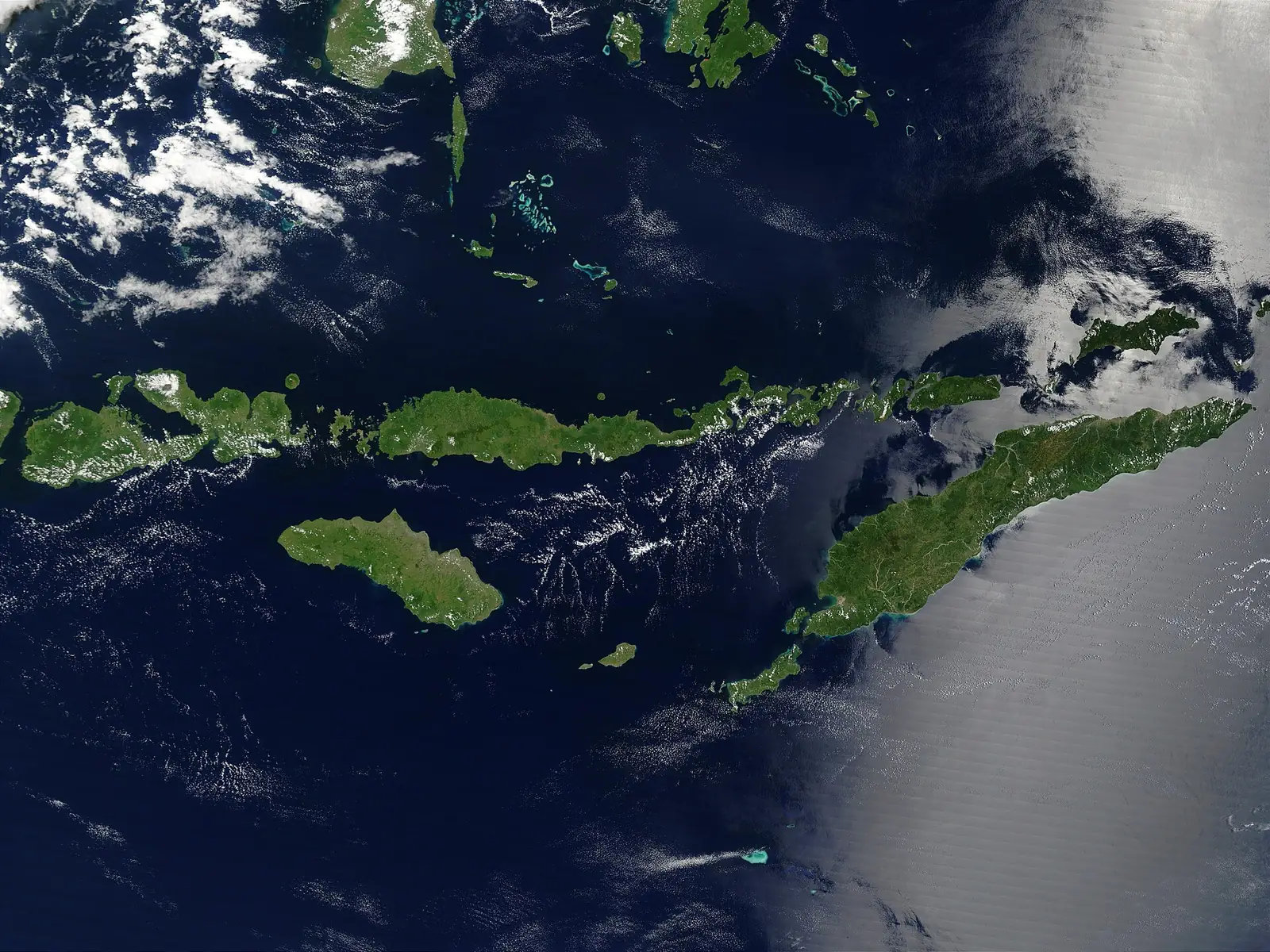
Taka Bonerate vs Wakatobi is a comparison of two Indonesian biosphere reserves in the Coral Triangle. On UNESCO's figures, Taka Bonerate's reserve is larger at 4,410,736 ha against 1,390,000 ha, while Wakatobi's reserve is three years older. Published species counts are not like for like, so this page names no winner and shows you the numbers.
The national tourism portal places Wakatobi and Taka Bonerate in the Coral Triangle. What follows sticks to what can be compared from named sources, and it says plainly where the comparison stops.
How do Taka Bonerate and Wakatobi compare?
| Measure | Taka Bonerate | Wakatobi |
|---|---|---|
| Position | Flores Sea, Selayar Islands Regency (park office) | South-east of Sulawesi, between the Banda and Flores seas, four main islands (Wikipedia) |
| Biosphere reserve area | 4,410,736 ha (UNESCO) | 1,390,000 ha (UNESCO) |
| People in the reserve | 124,455 (UNESCO) | 113,122 (UNESCO) |
| Biosphere reserve since | 2015 (UNESCO) | 2012 (UNESCO) |
| National park dating | Appointed 1992; final decree 2001 (park office) | Declared 1996 (UNESCO); established 2002 (Wikipedia) |
| Fish species | 564 reef and pelagic (park office) | About 590 (UNESCO) |
| Coral | 242 coral species (park office) | 396 coral reef species (UNESCO) |
The national tourism portal places both in the Coral Triangle, along with Ambon, Banda, Raja Ampat and Bunaken. That shared label is about the region and tells you nothing about which reef suits you.
How do they compare on size?
Only the reserves compare cleanly, because UNESCO publishes both as reserve figures. Taka Bonerate's reserve covers the whole Selayar regency, with 115,647 ha of land and 4,295,090 ha of sea, and the national park is set as its core. The park's own area is a much smaller figure. UNESCO's Wakatobi number is also a reserve figure, and setting it against the Taka Bonerate park figure would mislead you. Neither reserve size tells you how much reef you could reach on a week's trip.
Population shows the same point. UNESCO's two figures are close, but each describes a whole reserve. They do not count how many people live next to the reefs you would visit.
Taka Bonerate has a distinction Wakatobi cannot claim on these sources, since the park office and UNESCO describe it as the third-largest atoll in the world. Wakatobi is described by island group. That is a difference in landform and does not tell you which is the better place to dive.
What about species counts?
At first glance Wakatobi leads on both lines, slightly on fish and clearly on coral. Look at what is being counted, though:
- Different authors. Taka Bonerate's figures come from the park office, and Wakatobi's from UNESCO. Neither states a shared method.
- Different scopes. The park's 564 covers reef and pelagic fish across 53 families and 160 genera. UNESCO's Wakatobi figure is simply about 590 fish species.
- Different wording on coral. The park's table says coral, 242. UNESCO says coral reef species, 396. Those labels may not cover the same thing.
- Different dates. The park inventory is from 2017, with the fish figure drawn from a 2013 plan. UNESCO's figure is quoted here without a survey date.
In practice, a gap of a few dozen fish species tells you very little. The 242 and 396 coral numbers look far apart, but you cannot read that as Wakatobi being richer by that margin. Taka Bonerate's own numbers also vary from source to source, which is covered on Taka Bonerate marine life.
Which has the older protection?
It depends on which step you count, and this is where the sources are most useful side by side. Taka Bonerate was a nature reserve under a 1989 decree, was appointed a national park on 26 February 1992, and received its final designation on 15 March 2001. Those are three steps in one sequence, as the park office sets out on the Taka Bonerate National Park page.
For Wakatobi, UNESCO says the national park was declared in 1996, whereas Wikipedia says it was established in 2002. So on first appointment Taka Bonerate came first, and on final or later dating the order can flip depending on the source. Biosphere status is clearer: the park's own news lists Wakatobi, in 2012, as the earlier Indonesian reserve, and Taka Bonerate-Kepulauan Selayar followed in 2015.
Wikipedia also says Wakatobi has been on the tentative World Heritage list since 2005. UNESCO's World Heritage Centre shows Taka Bonerate on the same Tentative List, also submitted in 2005. A tentative listing is a nomination step and not an inscription, so it should not separate the two.
Can you visit both on one trip?
A few vessels link them, on listed departures and not as a regular service. Bluewater Dive Travel, a booking site, lists the liveaboard Bajau on an 11-night route called "Across Wakatobi, Bonerate and Komodo" in May 2027, and the price table on this page shows that listing's published figure. Coralbound, another booking site, says Bugis, from Nomad Archipelago, runs discovery routes through Wakatobi and Taka Bonerate among others. Those are sellers' statements, so check the current dates and route with the seller, because listed itineraries change.
If your interest is Komodo instead, the same booking site lists Bajau on an 8-night "Komodo & Taka Bonerate Adventure" in June 2027. The park office also recorded a 2024 Coral Expedition voyage from Makassar to Darwin that called at Tinabo, Rajuni and Komodo. Tourleader Club describes rare one-way Flores Sea repositioning trips on Dewi Nusantara, only once every few years. For how these boats work, read Taka Bonerate liveaboard.
Linking the two without a liveaboard is a different matter. This guide covers the Taka Bonerate side of that journey, so get any Wakatobi connection quoted before relying on it.
What can't be compared from published sources?
Several common questions have no like-for-like data behind them:
- Visibility and clear water. The park's 2014 dive sheets run from 4 to 8 m at Wall Reef to 15 to 20 m at Jinato Wall Paradise. No matching Wakatobi set is on record.
- Crowds. Selayar regency recorded foreign visitors rising from 22 in 2021 to 195, 163, 394 and then 635 in 2025. Those cover the whole regency, and no Wakatobi figure is on record.
- Non-divers. One commercial guide, Discover Your Indonesia, doubts the trip is worth it for snorkelling alone. That is one opinion on one side of the comparison.
- Bunaken and Raja Ampat. Beyond the shared Coral Triangle label, nothing here supports a comparison with either.
A sensible way to decide is to write down the two or three things that matter for your trip, such as the wall dives, the village stops or a fixed week. Then put those same questions to a seller for each place and compare the written answers.
Which prices are published?
Public fees, fares and third-party listings, each with its source and date. None of these is our price. Fees and fares change, so check the source before you rely on a figure.
| Item | Published price | Source | Checked |
|---|---|---|---|
| Bajau liveaboard, Wakatobi, Bonerate and Komodo, 11 nights, departure 20 May 2027 (listed by a booking site) | from US$4,620 | bluewaterdivetravel.com | Nov 2026 |
What do people ask about Taka Bonerate vs Wakatobi?
How does Taka Bonerate compare with Wakatobi?
UNESCO gives Taka Bonerate the larger biosphere reserve and Wakatobi the earlier listing. Fish counts are close and coral counts differ, though the sources do not count the same way.
Is Taka Bonerate less crowded than Wakatobi?
That cannot be shown from published numbers. Selayar regency recorded 635 foreign visitors in 2025, but that is a regency figure, so it does not compare with Wakatobi.
Which has clearer water, Taka Bonerate or Wakatobi?
No comparable data exists on this site. Park dive sheets for Taka Bonerate vary widely by reef, and they date from 2014, so ask operators for recent logs on both.
Which destination suits non-divers, Taka Bonerate or Wakatobi?
This guide does not rank them. On Taka Bonerate, the park lists snorkelling and canoeing, whereas one commercial guide doubts the trip is worth it for snorkelling alone.
Is Taka Bonerate worth visiting instead of Wakatobi?
That depends on your priorities, and no neutral source settles it. Taka Bonerate's clearest draws in the record are the atoll itself and the juvenile sharks at Tinabo.
Which sources support this page?
- UNESCO: Taka Bonerate-Kepulauan Selayar
- UNESCO: Wakatobi
- Wikipedia: Wakatobi National Park
- Park office: legal history
- Park office: position and atoll rank
- Park office: species counts, 2017
- Park office: fish families, 2013 plan
- Park office: park as the reserve's core
- Park office: biosphere order
- Park office: Coral Expedition route, 2024
- Park office: juvenile shark study
- Park office: Tinabo activities
- Park office: Wall Reef sheet
- Park office: Jinato Wall Paradise sheet
- Indonesia tourism portal: Coral Triangle
- Bluewater Dive Travel: Bajau listings
- Coralbound: Bugis routes
- Tourleader Club: Dewi Nusantara
- Selayar Regency: 2025 visitor report
- Discover Your Indonesia: travel guide
- UNESCO World Heritage Centre: Tentative List entry
How do I reach the desk?
Comparing routes? Send your dates, certification level and the places you want linked by WhatsApp +62 811-3941-4563 or bd@juaraholding.com. The desk has a stake here, as an enquiry may become a paid booking, so it is worth testing its answer against other sources. Terms bind only once written in an offer.
Send the desk your dates, group size, and dive level. The desk replies in writing.
Ask the desk on WhatsApp bd@juaraholding.com